Have you ever wondered what exactly makes a good steak or a proper Sunday roast so succulent and tender? The secret lies in something we take very seriously here at Wye Organic: hanging meat. While it might sound a bit old-fashioned, this process is the first (and arguably most vital) step in good butchery.
The art of ageing
At its core, hanging is the process of ageing meat. We do it by suspending the whole carcass (or parts of it) from a hook in a specially controlled environment. Here at our on-site butchery, we have a walk-in ageing room, which is essentially a massive refrigerated room with a huge fan to keep the air flowing.
So, what’s actually happening during this time? The enzymes in the meat get to work, naturally breaking down the tough muscle fibres. This makes the meat more relaxed, softer, and much more tender. While it might sound a bit off-putting, this is technically the very start of decomposition. But there's no need to worry! When a butcher controls the temperature and conditions correctly, proper decay that would spoil the meat is still weeks, or even months, away.
Why moisture matters
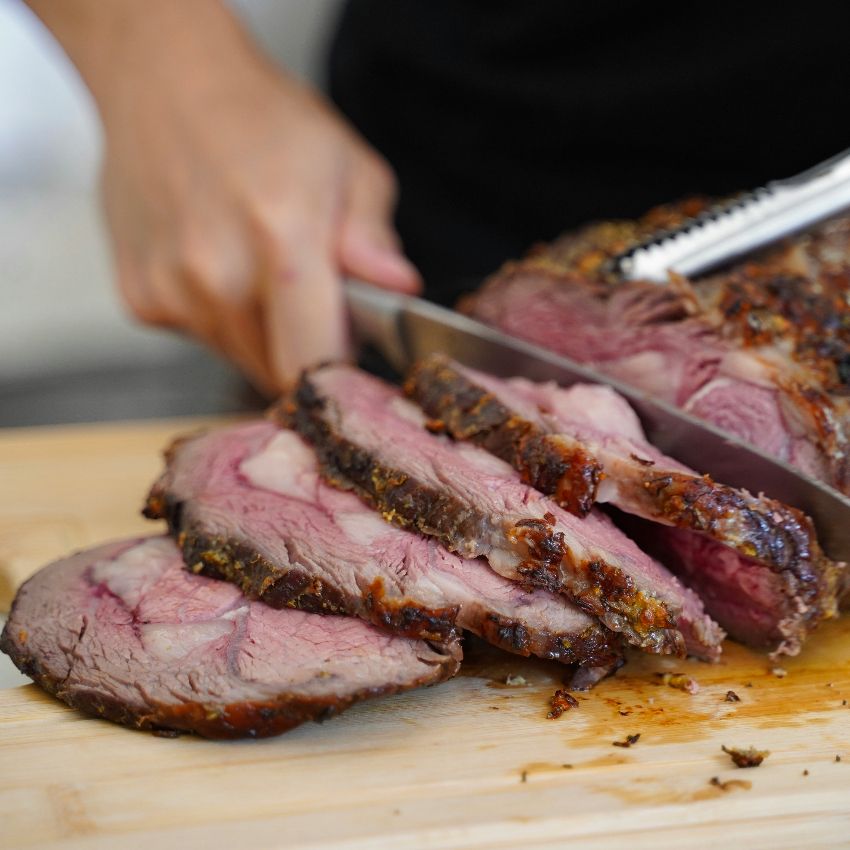
Hanging meat also helps it lose moisture. Now, this might seem counterintuitive, but it's a very good thing for cooking. Young, or "unhung," meat is full of water. This moisture leaches out during cooking, ending up as a puddle in your pan or on your carving board. Oddly, this means that "wet meat" can end up tasting dry and flavourless after it's cooked. In contrast, properly hung meat is richer, tastier, and more tender. It’s as simple as that.
Not all meat hangs equally
While almost all meat benefits from a few days of hanging to relax and let the fat solidify, not all cuts are suited for a long hang. Meats that lack good marbling or a thick fat covering, such as pork, venison, lamb and boar, don't stand up well to lengthy hanging. The fat acts as a protective barrier, preventing deterioration. We still hang these for about four to six days to allow the flavours to develop safely, but we wouldn’t leave them for much longer.
The freezing conundrum
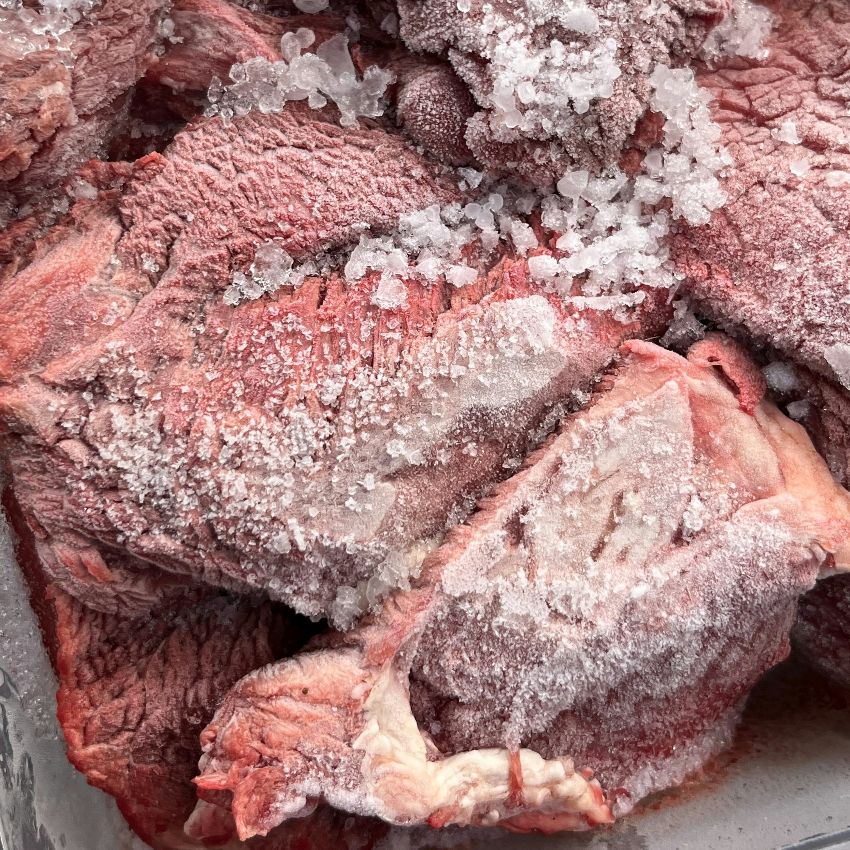
If you plan to freeze your meat, it's even more important to buy aged meat. Why? Again, it all comes down to moisture. As the water in unhung meat freezes, it expands into ice crystals that can tear and push apart the meat fibres. Well-hung meat, with its lower moisture content and more elastic fibres, is much better at coping with this. This means when you defrost and cook it, less water will leak out, ensuring a better result.
The butcher's advantage
The biggest reason to choose a local butcher over a supermarket is that their meat is almost certainly not hung properly. Putting aside animal welfare and
provenance for a moment, big retailers don't want to hang meat because it leads to weight loss. A side of beef can lose 15-20% of its weight through "drip loss" during ageing, and for supermarkets, weight equals money. There are even horror stories of abattoirs being told to regularly hose down carcasses to retain moisture and weight.
So, there you have it. Hanging is a cornerstone of our craft, and it's perhaps the main reason to choose your local butcher. We hope this has given you a new perspective on where your food comes from and why a little patience in the butchery can lead to a lot more flavour on your plate.
Buy your well-aged meat here.


© 2026 - Wye Organic
Powered by
